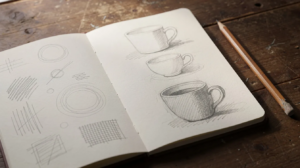
The quick answer from my own restart: spend ten minutes doing a blind contour drawing of one desk object, then ten minutes drawing the same object with your eyes open. That is the single drawing exercise I would hand anyone picking up a pencil after years away.
I came back to drawing after about eleven years. I bought new pencils, sat down to draw something impressive, and closed the sketchbook after fifteen minutes feeling worse than when I started. What finally worked was going smaller and duller: one object, one pencil, twenty minutes. No grand subject, no pressure to create something worth framing. Just a garlic bulb on a chopping board, drawn slowly, twice.
Targeted exercises for drawing beat unfocused sketching every time. Readers searching for this kind of advice usually want concrete drills, not theory or a shopping list of drawing tools. So this post is a ranked list of seven exercise types covering observation, dexterity and sketchbook habits, built for Sketching Again students who are restarting or leveling up. I also wrote about learning to draw as an adult, for readers who wonder whether starting again later in life is harder. My short answer is that adults have more patience and a longer attention span than they did at fifteen, and both of those are advantages in this process.
How I Chose The Most Effective Exercise For Drawing
I did not grab random drills. I kept the exercises that repeatedly helped real learners develop their drawing skills, judged through the lens of adults juggling jobs, family and limited time. My own filter was simple: would I still repeat it most weeks?
Core Criteria For Including An Exercise
-
Impact on fundamentals: each exercise must improve line control, proportion, form or value in a visible way.
-
Time efficiency: results in 10 to 30 minute sessions. My own sweet spot is twenty minutes, three times a week. Fifteen minutes of daily practice can significantly enhance skills, so even short blocks count.
-
Clarity and repeatability: simple to understand, easy to repeat, trackable in a sketchbook over weeks. I write the date and one plain note on each page, such as “handle too wide” or “got the lid right,” so pages become information instead of verdicts.
-
Applicability and accessibility: it must translate to real sketching and work with a pencil, pen and cheap paper. I use an ordinary HB, and a cheap pencil removes the pressure to make something precious. No special materials or software needed.
The 7 Best Exercises For Drawing (Ranked By Real-World Impact)
Seven covers the main pillars of line control, observation, form, value, gesture, imagination and habit building. I list them in the order I usually recommend to Sketching Again students who are restarting or leveling up, because they help build habits and stronger observation over the course of regular practice. Regular practice is key to enhancing artistic skills over time, and these exercises give that practice a direction.
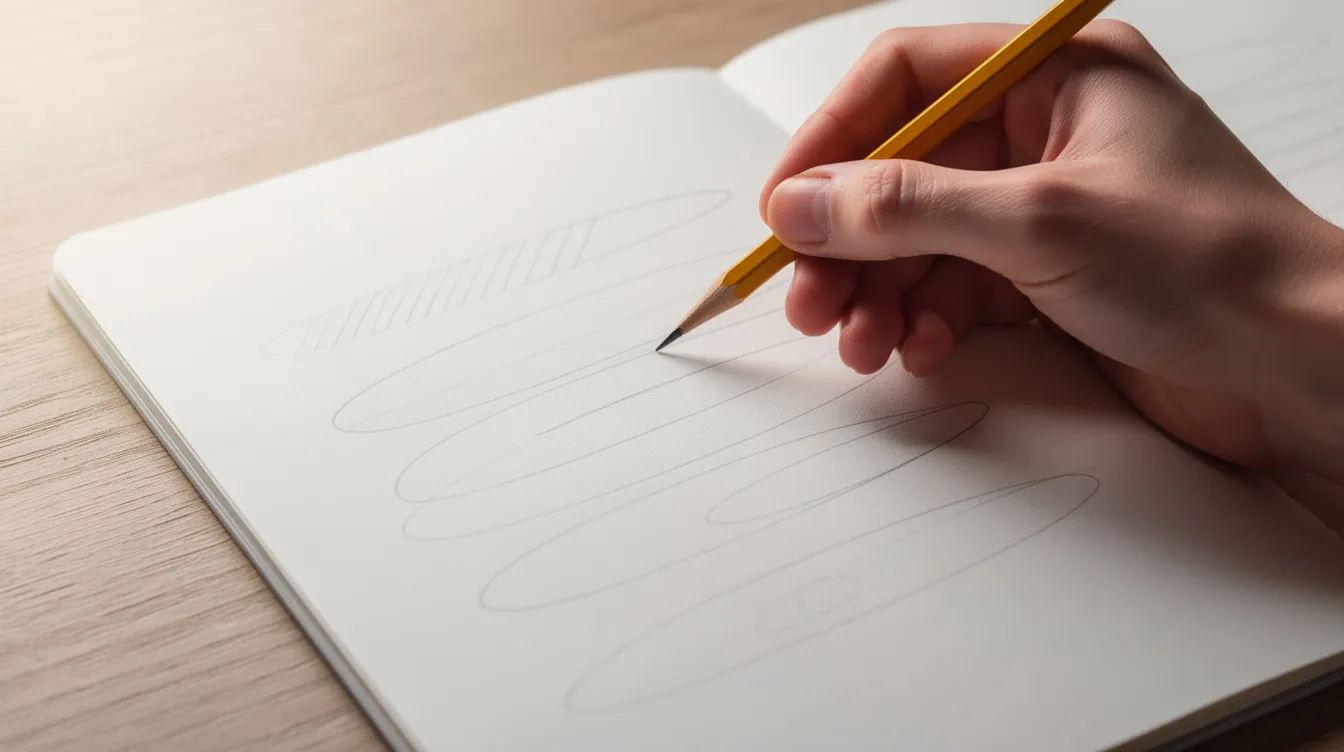
1. Line Control Warm Ups and Mark Making (Lines, Ellipses And Simple Shapes)
Pages of straight lines, curves, circles and ellipses drawn deliberately as a daily warm up. Nothing flashy: rows of parallel marks, ghosted curves, hatched patches. Think of it as stretching before a run.
Why It Stands Out
Clean, confident lines underpin every other exercise, from gesture to perspective. Five to ten minutes of this before a session reduces stiffness and gives you more control over every mark that follows, treating each pen stroke a bit like painting, where you place it carefully and confidently instead of scratching at the page. Drawing parallel lines helps improve line accuracy, and ghosting lines improves confidence in placing drawn lines and in drawing curves. It is especially powerful for adults returning after a long break, when the hand feels disconnected from the eye.
Best For
Adults with a shaky hand or timid, scratchy lines, and anyone wanting a dependable warm up ritual before perspective or technical work.
Key Strengths
Practicing strokes builds muscle memory, and muscle memory is essential for improving drawing capabilities. It requires many repetitions to develop, but line warm ups demand almost no mental load, so they work when you are tired after work. Drawing circles and ellipses enhances shape accuracy, and practicing shapes repeatedly builds muscle memory for drawing. Progress shows when you compare pages from different weeks: the lines get straighter, the circles rounder, the ellipses more even. Over time, those repeated marks start to function like visual words you can use more naturally in later drawings.
Possible Limitations
Can feel boring if never connected to real drawings, and becomes busywork if done fast and mindlessly. Treat each mark with a bit of intention.
2. Blind And Continuous Contour Drawing From Life
Blind contour means drawing edges without looking at the page. Continuous contour means one mostly unbroken line while observing the subject. This is the exercise I would give anyone starting again, and the one I still repeat most weeks. Kimon Nicolaides popularised blind contour in the early twentieth century, and his Wikipedia page is a short, authoritative summary of why. I am not a teacher and have not studied his book in depth, but the exercise has earned its place in my week.
Why It Stands Out
When you have not drawn in years, the problem usually is not your hand. It is that you have stopped really looking. You glance at a mug and draw the idea of a mug. Contour work retrains you to look before the hand moves. Blind contour drawing trains the brain to see and draw details accurately. Continuous line drawing improves hand-eye coordination and observational skills at the same time. Observational drawing improves the ability to capture shapes and proportions accurately, and this is where that ability starts as you learn to see like an artist.
Best For
People whose drawings look “cartoony” when they wanted realism, and people who rush and barely glance at the subject.
Key Strengths
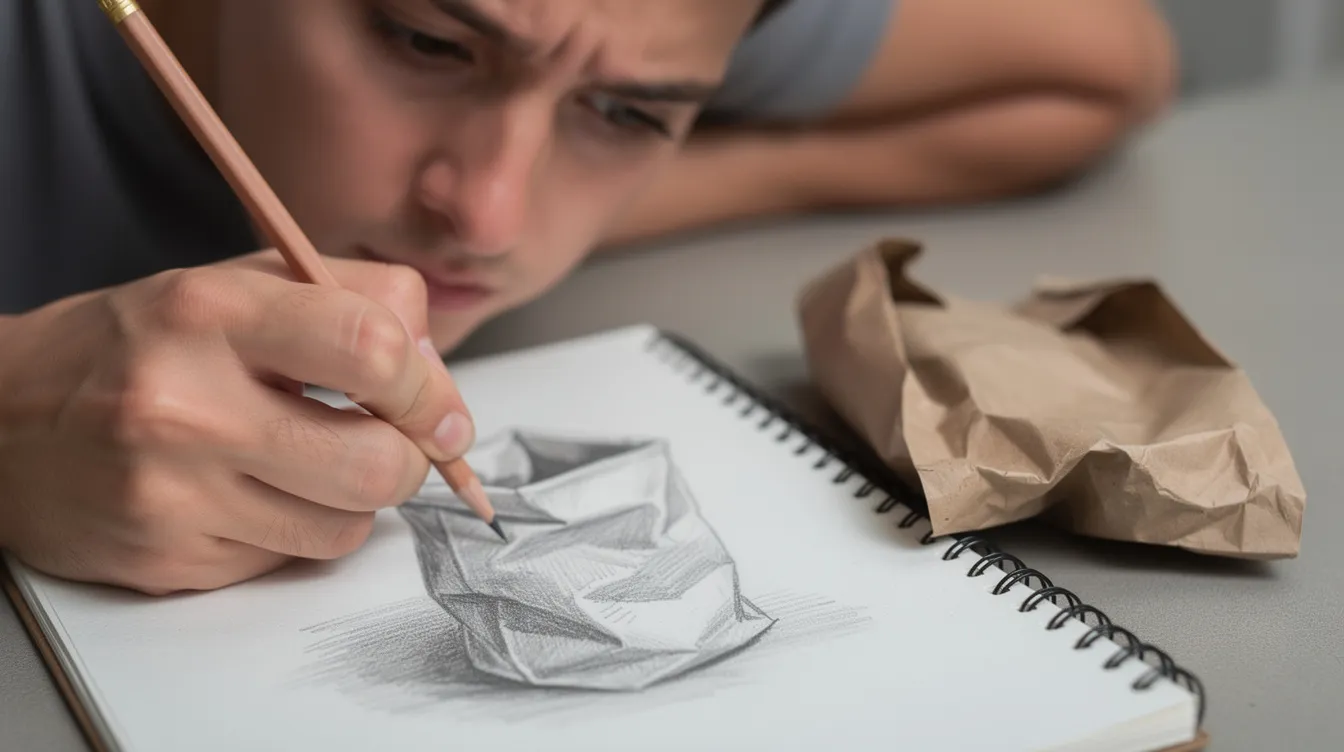
Step by step, my twenty-minute routine: a pencil, paper, a timer and one object with character (glasses, a crumpled receipt, a garlic bulb, a worn trainer, not a plain ball). A five-minute blind round, a second five-minute blind round even slower, then a ten-minute open-eye round. Stop when the timer stops, because stopping on time makes you want to come back.
The blind drawings will look strange, with lopsided lines and features floating in the wrong point. The open-eye drawing is where the payoff shows. Building hand-eye coordination enhances drawing skills across every technique, and this exercise does it faster than anything else I have tried.
Possible Limitations
Results look odd, which frustrates perfectionists, and rushing defeats the purpose. My early mistakes: I peeked (now I tilt the sketchbook away or cover my drawing hand), I rushed (if you think you are going slowly, go slower), I judged every page, and I changed the object daily. Drawing the same object a few days in a row got me better progress. As an additional exercise, try upside-down drawing, which enhances attention to shapes and relationships in a similar way.
3. Gesture Drawing For People And Animals
Quick studies from life or photos focused on movement, weight and flow rather than details. For me it began as quick sketches of people on the train, done with a pen so I could not erase.
Why It Stands Out
Gesture drawing prioritizes movement and overall form over detail. It captures poses and energy fast, breaks the habit of stiff, overworked figures, and matters for figure drawing, urban sketching and character design. In one study of older adults doing observational drawing, 71 percent of participants reported entering flow states during gesture and contour techniques.
Best For
People drawn to figures or sketching in public, and artists whose figures look rigid or mannequin-like.
Key Strengths
Fits 5 to 15 minute windows, encourages big, bold, loose mark making, and applies right away to sketchbook pages and illustrations, especially if you experiment with different drawing tools when you want looser marks in quick gesture studies. Practicing strokes helps them become second nature, and gesture is where that speed becomes visible. Drawing artists need to practice strokes and shapes regularly, and gesture keeps both loose.
Possible Limitations
Beginners can end up scribbling without capturing structure, and it does not teach fine detail or likeness, so pair it with slower studies.
4. Construction And Simple Forms In Perspective
Drawing boxes, cylinders and spheres from imagination and reference, rotating them and combining them into simple objects. This is where you start to realize that every coffee cup is a cylinder, every head is an egg on a box.
Why It Stands Out
Seeing everything as simple 3D forms is the leap that makes objects solid. Drawing basic shapes helps develop understanding of form and structure. In a study with medical students, just four one-hour sessions of technical drawing improved mental rotation test scores significantly. The same idea applies here: construction improves spatial reasoning and your ability to describe volume on a flat page. It underpins solid drawing in any style, from comics to industrial sketches.
Best For
Adults whose objects or heads look flat, and self-taught artists who have avoided perspective because it felt too technical or plan to draw architecture and vehicles. Negative space drawing aids in visualizing compositions correctly and pairs well with construction work.
Key Strengths
Teaches building from forms rather than copying outlines, works from imagination or reference, and scales into vanishing-point studies.
Possible Limitations
Can feel abstract if never applied to real subjects, and needs concentration, so it is not a half-awake bedtime drill.
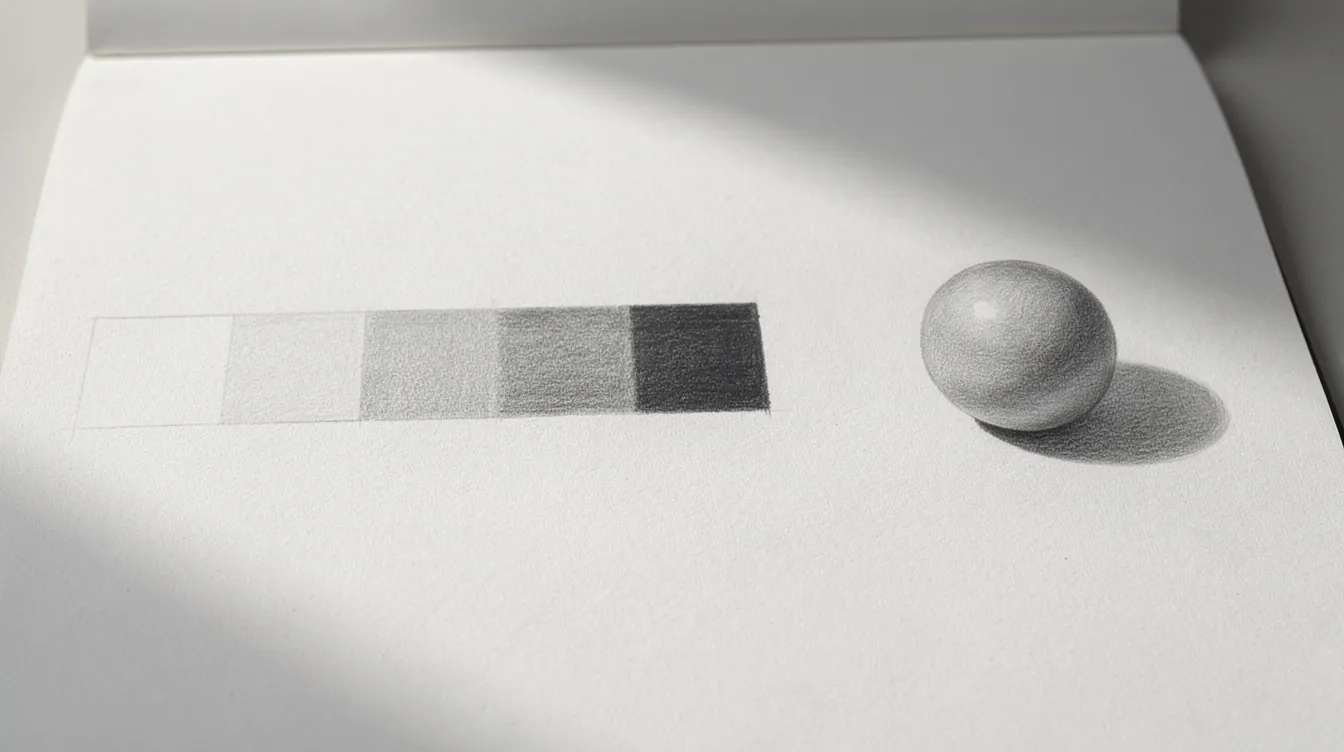
5. Value Scales And Small Value Studies
Gray scales, two-value thumbnails and small light-and-dark studies without color. You draw a strip of boxes from white to your darkest value, then apply what you notice to a simple object.
Why It Stands Out
Understanding light and shadow is crucial for realistic drawing. Value is what makes sketches feel three-dimensional and readable, and disciplined practice improves shading and contrast control. In my own restart, simple shading on a single object was an early step after contour work. Practicing hatching and stippling builds an artist’s vocabulary, and cross hatching in particular lets you layer different textures and values with just a pencil.
Best For
Artists whose sketches look flat even when proportions are right, and people moving from line-only sketches into graphite, charcoal or ink wash. Drawing textures helps in understanding and replicating surface qualities, so value studies are the natural bridge to creating more tactile work.
Key Strengths
Simplifies complex scenes into light and dark shapes, finishes in 15 to 30 minutes, and improves control of pencil pressure and hatching density.
Possible Limitations
Value scales can feel school-like, and they need good lighting and suitable paper to show subtle steps.
6. Timed Studies And Iterations Of The Same Subject
Draw the same object or scene several times with different limits, such as 2, 5 and 20 minutes. This echoes what I found by repeating one object over several days.
Why It Stands Out
It trains you to spot essentials first and add detail only when time allows. What you capture first shows what you truly see as important. Drawing from memory improves observational skills and retention, and after a few timed rounds you notice you can recall the shape of an object with surprising accuracy. Repetition is essential for building muscle memory in drawing, and timed studies force the repetitions naturally.
Best For
Adults who feel painfully slow, people preparing for on-location sketching or timed life drawing classes, and anyone who overworks one drawing until the inspiration drains out.
Key Strengths
Builds speed and decision-making, encourages experimentation because you will redraw anyway, and fits one quick round before or after work.
Possible Limitations
Some people freeze under timers at first, and an all-rushed diet can leave slower, refined skills behind. Balance timed rounds with longer, patient studies.
7. Imagination Drills: From Simple Prompts To Visual Stories
Written prompts, object mashups or “one theme for the day” for drawing from imagination on top of observational work. For example: draw a chair from memory, then check your real chair and draw it again.
Why It Stands Out
Adults often want original work, not just copies. Playful imagination drills support long-term consistency and keep creativity alive. This is where you start drawing new things that did not exist before you picked up the pencil.
Best For
Artists already doing observational work who want to decide what to draw from their own idea, people stuck in perfectionism, and anyone aiming at illustration, comics, concept art or drawing journals.
Key Strengths
Connects technical skills to personal ideas, can be scaled from single objects to mini stories and full-page paintings in value, and shows which fundamentals you still need. In my opinion, this is the exercise that keeps the whole practice from feeling like homework.
Possible Limitations
Too early, it may reinforce bad habits from weak basics, and results can disappoint next to polished art unless treated as practice, not portfolio pieces.
Quick Comparison Of The Best Drawing Exercises
A cheat sheet for choosing where to start this week:
-
Line Control Warm Ups: clean, confident strokes and a ready hand in 5 to 10 minutes.
-
Blind And Continuous Contour Drawing: sharper observation and breaking the habit of drawing memory symbols.
-
Gesture Drawing: lively poses and movement in people and animals.
-
Construction And Simple Forms: thinking in 3D so objects and heads feel solid.
-
Value Scales And Value Studies: shading, contrast and believable light.
-
Timed Studies: speeding up, loosening up and learning what matters in a scene.
-
Imagination Drills: turning skills into personal drawings and stories.
How To Choose The Right Exercises For Your Drawing Practice
Nobody needs all seven every day. Selection depends on experience level, available time and personal goals.
Choose Based On Your Experience Level
If you are a beginner or restarting after years away, start with line warm ups, blind or continuous contour and simple value scales, in 20 to 30 minute sessions, 3 to 5 days a week, with only 2 or 3 exercise types at a time. I did contour work alone for about three weeks before adding anything, and I still keep one contour session a week. Regular practice maintains and improves drawing skills, and drawing regularly helps prevent skill deterioration over time.
If you are intermediate, mix gesture, construction and timed studies to deepen structure and speed, and end sessions with a small imagination prompt. Before you start either path, open an old sketchbook. I found mine in a box and flinched at most of it, but a few pages surprised me. Redraw one old drawing you like, from memory or a photo, for a private before and after. Muscle memory helps artists draw without conscious thought once it is built, but it requires many repetitions to build effectively, so patience with the beginning matters.
Choose Based On Your Schedule And Energy
Busy weekdays call for time-boxed sessions: 10 minutes of lines plus 10 of gesture or contour. My realistic target is three sessions a week, and two is fine. Keep pencil, paper and timer in one space, because setting up is the biggest barrier, and choose the object the night before. Attach the session to something you already do, like the evening tea. With only ten minutes, do just the blind round. That alone is helpful in different ways you will notice within weeks.
Longer weekends are for deeper value studies, construction pages or a mini project with one focused subject such as mugs, plants or street corners.
Choose Based On Your Drawing Skills and Goals
-
Stronger realism: contour from life, value studies of simple objects, slow construction of everyday items.
-
Expressive sketchbooks: gesture, continuous line and imagination prompts built around your day.
-
Characters and scenes: construction, gesture and short timed iterations, then imagination drills.
Which Exercises Should You Start With Today?
If your lines are shaky and hesitant, choose line control warm ups. If you struggle to draw what you see, choose blind or continuous contour, which is where I would start after a long break. Practicing line control improves steadiness and stroke confidence from the first session.
-
Choose Gesture Drawing if your people feel stiff, or Construction And Simple Forms if your drawings look flat and you want to print depth on the page.
-
Combine one technical exercise (lines, forms or values) with one expressive exercise (gesture, contour or imagination) in each session.
The effort of choosing is smaller than it looks. Pick two, set a timer, and go.
Final Thoughts: Turning Exercises Into A Sustainable Drawing Habit
The best exercise for drawing is the one you can repeat consistently over months, not the one that looks impressive on social media. Treat the drills as a personal training plan and adjust with the seasons of your life. Some weeks you will have the knowledge and energy for challenging construction pages. Other weeks, a quiet blind contour of your coffee cup is the only thing that fits, and that is enough.
I keep a running list in this sketch exercises worth repeating post, for readers who want a rotation instead of hunting for something new each time. At Sketching Again I build lesson plans around these same core exercises, because they reliably move adults from rusty to confident. The instructions are short, the techniques are proven, and the tips are things I use myself.
Pick two exercises from this list and try them for one week. Date each page in your sketchbook. By the end of the month, flip back to the beginning. The shift will be visible, and you will finally have the proof that progress was happening all along.
FAQ
How long should I do this exercise before moving on?
I did blind and continuous contour for about three weeks before adding anything else, though I still return to it. When the open-eye drawing starts to feel easy, add something new but keep one contour session a week. There is no print certificate for finishing.
What drawing tools or pencil should I use?
Whatever you already own. I use an ordinary HB for almost everything, since fancy materials are not needed at the beginning and a cheap pencil lets you focus on the work instead of the tools.
Do I need to do the blind drawing part?
You can skip it, but I would keep it, because it forces you to slow down and look. If you truly dislike it, try drawing with your non-dominant hand as a substitute. Both challenge the same habits.
What if my drawings still look wrong after a few weeks?
Mine did too. Compare your drawings to each other, not to an ideal. If the third drawing of an object has closer proportions than the first, you are improving. Practicing drawing shapes improves accuracy and control over time, not overnight.
Can I do this on a tablet?
Yes, the same method applies in real time on a screen. I prefer paper because the blind round feels more natural when I can feel the pencil dragging, but that is personal preference, not a rule.